Medical & health practices
Meridian
Warm parchment surfaces, one deep-juniper accent, 18px Atkinson Hyperlegible body — a typeface designed for low-vision readers. Signature element: the first visit, minute by minute.
Websites, built by the company that makes the scanner
We build sites to pass every check our own scanner runs — then keep scanning them, so the claim stays true after launch. Below: the three starting points, each a live site, each with its scan result next to it.
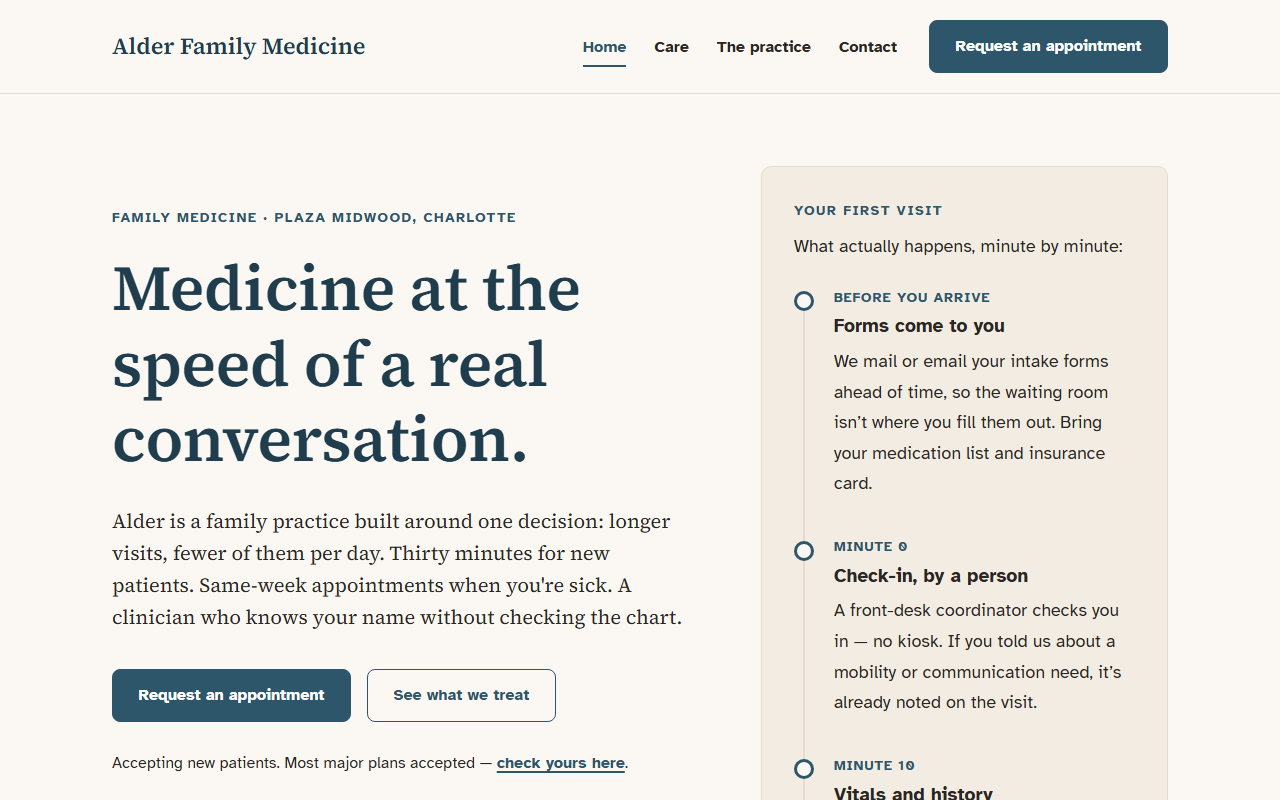
Medical & health practices
Warm parchment surfaces, one deep-juniper accent, 18px Atkinson Hyperlegible body — a typeface designed for low-vision readers. Signature element: the first visit, minute by minute.
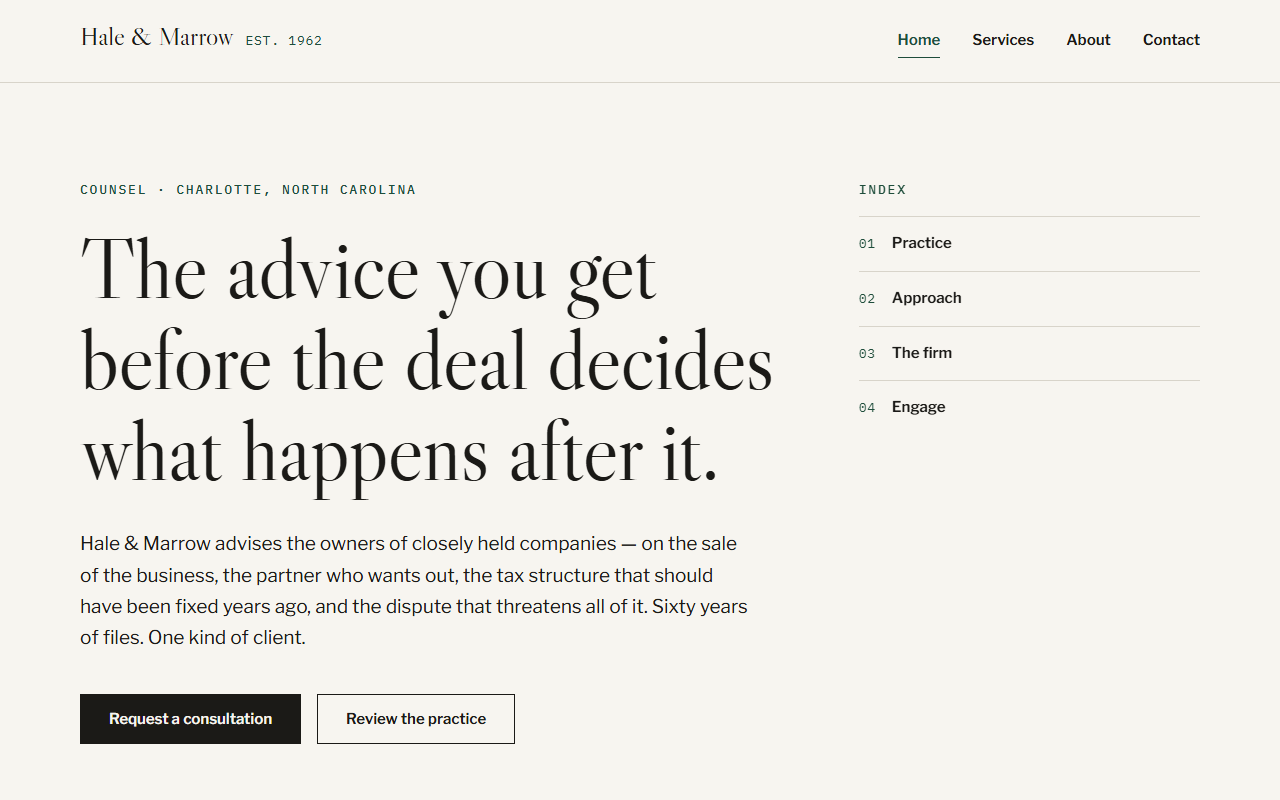
Law firms & professional services
Ink on ivory, editorial serif authority, ledger-green accent, tabular mono numerals. Signature element: a numbered index rail that reads like a well-kept docket.
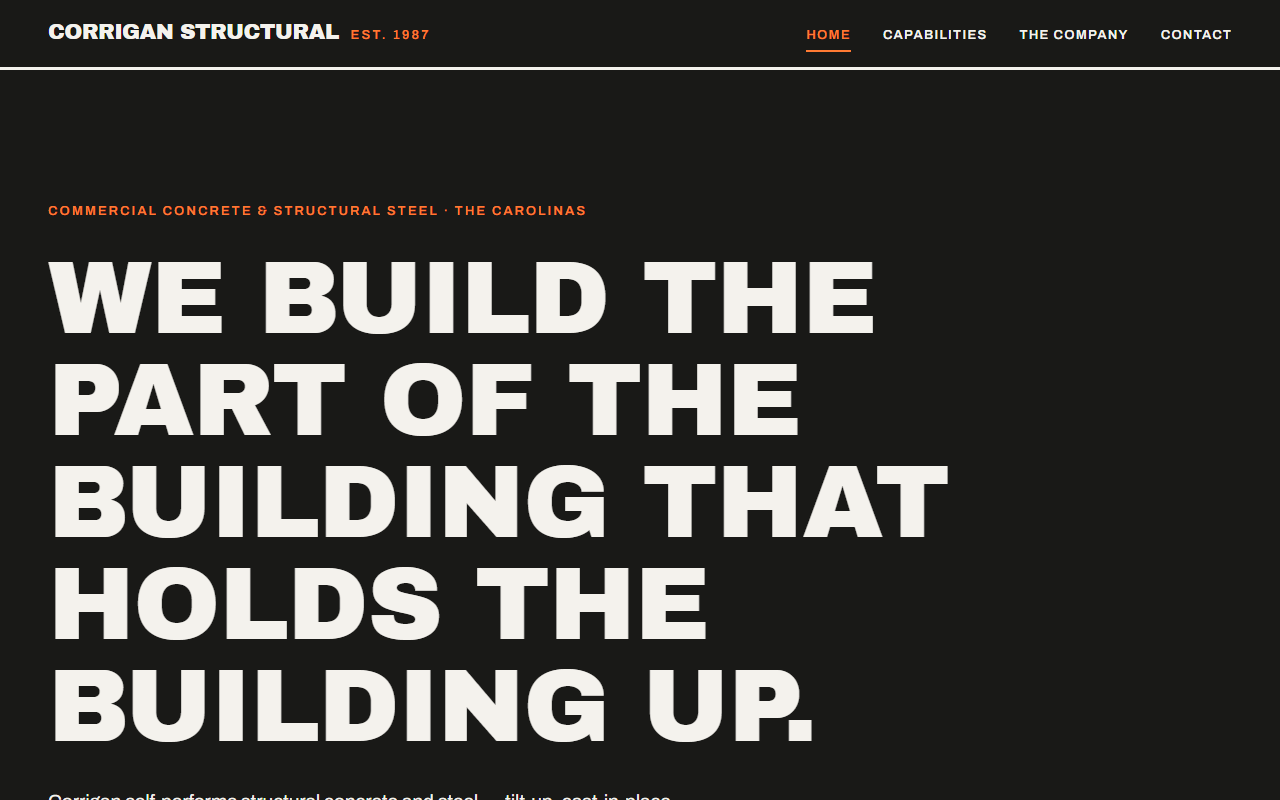
Trades & built environment
Dark charcoal, poster-weight grotesque type, one safety-orange accent. Signature element: the spec plate — an equipment-nameplate data block for projects and capabilities.
Scan results are from the ClearSite engine run against each live demo on the date shown. Full disclosure, because that’s the point: each demo’s scan also flags four low-priority notes that belong to the shared demo hosting (email-authentication and certificate DNS records only a custom domain can carry) — on a client build with its own domain, we set those too. A scan is a point-in-time observation of a specific site — which is exactly why every site we build ships with the scanner still attached (below).
What’s included
Every build starts from the same framework. These aren’t promises in a proposal — they’re properties of the code, and the scan verifies every one of them.
Semantic landmarks, designed focus states, contrast locked into the design tokens, 24px minimum targets — checked criterion by criterion, then verified by scan.
No CDNs, no tracking pixels, no external fonts. The scan report shows the outbound request list; by default that list is empty.
The analytics seam ships disabled. If you turn it on, it cannot fire before a visitor opts in.
A strict Content-Security-Policy with no script exceptions, HSTS, and the full header set — deployed with the site, not left as a to-do.
Latin-subset woff2 files served from your own domain — no font CDN watching your visitors.
Static HTML, no JavaScript by default, LCP under 2 seconds on the templates as shipped.
Ongoing verification
Three weeks after launch, someone adds a chat widget. Marketing drops in a tracking pixel. A plugin update starts calling home. Nothing looks different — but the privacy and accessibility state you paid for is gone, and nobody knows.
That’s why every site we build ships with continuous scanning attached — not as an upsell, but because it’s the only honest way to keep saying the site is clean. The scanner re-checks on schedule, and the moment something regresses, you hear it from us — with the exact request, on the exact page, and the fix.
Verification is point-in-time and site-specific: each re-scan reports what was observed on that date, at that address. We report technical facts — never legal conclusions.
Fixed-price builds on the framework above, scanning included — starting at $49. Here is the kind of report every site we build ships with, then keeps passing.
See a sample report